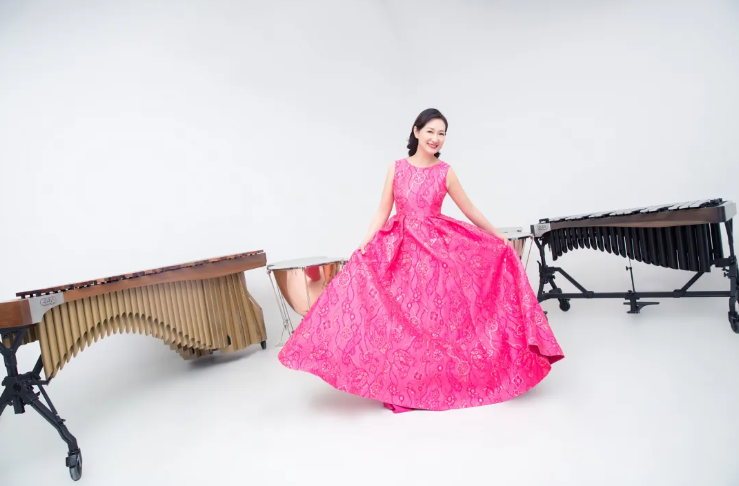
In the world of percussion, rhythm is the pulse and timbre is color, and Zhang Jingli has used decades of dedication and innovation to compose a brilliant life of her own on this small stage. From the shock of her first encounter with percussion to becoming a representative Chinese voice on the international stage; from a performer in a national-level orchestra to an educator cultivating talent, every step she has taken is closely connected to percussion. On the occasion of Teachers' Day, we spoke with percussionist and Central Conservatory of Music professor Zhang Jingli to explore her deep bond with percussion and hear her thoughts on art, education, and the future.
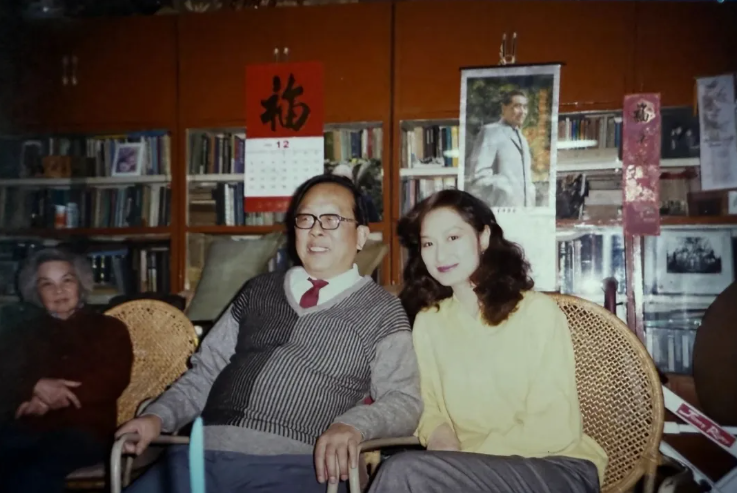
On September 5, we met Zhang Jingli at the Central Conservatory of Music. That day happened to be the new student registration day at the Central Conservatory of Music. Watching the new students coming and going across campus, dragging their suitcases, she could not help recalling her first arrival at the school—“That was 1988. At the age of 12, I entered the first year of junior high at the Central Conservatory of Music Middle School, studying under the renowned percussionist Mr. Zhao Ji.”
On her artistic path, her family's support has been Zhang Jingli's strongest backing. Although her family initially did not understand percussion as a profession, seeing her love for and dedication to music, they gave her unconditional, full support. Her mother often says, 'Since you have chosen it, you must do your best.' These words are not a demand but an expectation and a belief, and they have always inspired her.
In Zhang Jingli’s view, her family’s “unconditional trust” is her greatest motivation. Though they are not experts in music, they are “experts” in life; this trust gave her the soil to grow freely and allowed her to pursue the art in her heart with a pure heart. She knows well that behind an artist’s glamour are unseen dedication and loneliness, and that the support of family and friends is like the steady fundamental tone of the timpani, providing solid harmonic support for every brilliant solo passage of hers.
Zhang Jingli's husband, a senior fellow student in percussion, is also her kindred spirit in art and life. At every concert, her husband is always a focused presence in the audience, and his applause is always the warmest and most lasting. When Zhang Jingli decided to further her studies in Germany, her husband not only gave financial support but also important moral encouragement. “I still remember after a performance in Vancouver, Canada, when the audience was leaving, his hands were red from clapping. He joked, ‘Today's performance was so wonderful that I couldn't help wanting to clap along to the beat.’ This companionship and support, unchanged for decades, has become an important driving force for me to move forward.”
Speaking of how she became involved with percussion, Zhang Jingli admitted that it was both a coincidence of the times and an inevitability of fate. In the 1980s, when professional percussion education in China was just beginning, she touched percussion live for the first time; the primal power of the rhythm and the rich changes in timbre struck her heart, and she fell completely in love with it.
After entering the Middle School Affiliated to the Central Conservatory of Music, Zhang Jingli began systematic study of the snare drum and the ladder xylophone. In 1990, as a third-year student at the affiliated middle school, she gave the first solo percussion recital of her life, a landmark concert on her percussion path. That day, her mentor Zhao Ji brought a dedication that Zhao Feng, then president of the Central Conservatory of Music, had specially written for her: 'Rites and music arise from the human heart; the heart is moved because things make it so. Therefore only music cannot be false; the perfectly good and perfectly beautiful is what is beautiful.' Zhang Jingli admits that she was young at the time and could not fully understand the meaning of the inscription, but she regarded it as a motto on her artistic path, often read it, and it inspired her through the decades of her artistic career that followed.
Mr. Zhao Ji was the "life mentor" on Zhang Jingli's path in percussion. From the first day he taught Zhang Jingli, Zhao Ji gave her support, encouragement, care, and guidance for 30 years. In teaching, he would inspire her in a unique way—when Zhang Jingli practiced snare drum, he would open the piano lid and accompany her; the devoted way he played when he got excited left a deep impression on Zhang Jingli and gave her a deeper understanding of the appeal of percussion.
In 1999, Zhang Jingli founded the Jianli Percussion Ensemble. Its name was chosen by Zhao Ji and is full of the mentor's expectations and blessings for the ensemble. Zhao Ji's profound love and reverence for the percussion profession also deeply influenced Zhang Jingli, enabling her to maintain dedication and passion from establishing her professional direction to persevering on her artistic path. Later, after becoming a teacher herself, she followed her mentor's example and influenced her students through action.
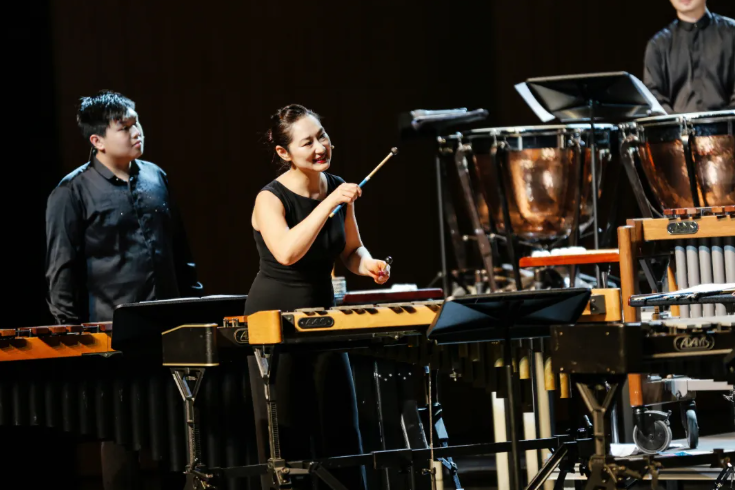
From the China National Symphony Orchestra to the China Philharmonic Orchestra, and back to the Central Conservatory of Music, from stage performer to classroom teacher, this change of identity led Zhang Jingli through a comprehensive reshaping of roles and reinvention of value.
'This is not a simple career change. When serving as a performer in a top orchestra, the first task is to obey the conductor, instantly grasp the conductor's intentions, and cultivate deep musical cultivation through a large body of symphonic literature. After becoming a teacher, my core work is to impart knowledge and resolve doubts—that is, to identify and solve problems.' Zhang Jingli summed up that she distills intuitive playing that 'can only be sensed' into systematic, clear, teachable language and methods.
In Zhang Jingli's eyes, the charm of percussion is endlessly varied and irreplaceable—far more than “rhythm” and “excitement.” First, its rich tonal colors are the fundamental appeal. Any object in the world that can make a sound may become a percussion instrument, and this infinite possibility of timbre provides performers and composers with a vast “palette.” Second, rhythm, as the skeleton of music, is the fundamental force that drives music forward. The rhythm of percussion is the purest and most direct; it can imitate sounds of nature—thunder, a heartbeat, raindrops, footsteps—and also connect to humanity's most instinctive emotions—powerful drumbeats strike the chest and set the blood racing. This primal power is the unique charm of percussion.
During her many years of teaching at the Central Conservatory of Music, Zhang Jingli developed a deep understanding of percussion talent development. She believes that cultivating outstanding percussion students is a systematic project, far from merely passing on technique; its core can be summarized as a closed loop of “foundation cultivation—innovation guidance—future outlook.”
In guiding students toward innovation, her approach is first to establish the “measure” of tradition and standards, then to encourage breakthroughs. She leads students in systematically studying classic modern percussion literature from the 20th century onward and analyzing the masters’ innovative performance techniques and approaches to developing new timbres, so that students understand the frontier and ceiling of “innovation.” On this basis, she guides them to explore their own innovative directions by combining their cultural backgrounds and artistic insights.
In the course of teaching, she found that teaching is not only about imparting skills but also about shaping people. Students' practice habits, ability to handle pressure, aesthetic taste, and even personality and outlook on life are all influenced through learning. She therefore began studying psychology, learning when to give students encouragement or criticism; she also tried to become a philosopher, guiding students to think about the meaning of music; and she worked harder to become a role model, inspiring students through her own attitude toward art. In this process of mutual learning, students' questions often prompt her to rethink concepts she has long taken for granted.
Seeing her students begin to stand out, Zhang Jingli feels deeply gratified. Her expectations for them have long gone beyond “winning awards” and “rankings.” She hopes they will become “cultural ambassadors”: wherever they stand on a stage in the world, they will play not only notes but also the spirit and contemporary vitality of Chinese culture; they will tell China's story in a musical language the world can understand and become bridges for cultural exchange between China and the West. She hopes they will not be content to perform existing works but will actively engage in creation, so she deliberately arranges for them to study with composition teachers or conductors... Most importantly, she hopes they will always be hungry for knowledge and sincere about art. Only the most genuine love for music and a desire for constant exploration can sustain them through a long artistic career. “My ideal is to cultivate talents with the spirit of the ‘artisan’—top-level skills in their hands, deep thoughts in their minds, and broad vision in their hearts.”
In 1999, Zhang Jingli founded the Jianli Percussion Ensemble, originally out of a love for the chamber ensemble format. In a symphony orchestra, although the percussion section is indispensable, it lacks space to show its own agency; she and many outstanding colleagues shared a strong desire to express music fully. She hoped to build a platform where percussion could become the protagonist for articulating emotion and expressing the self, exploring new playing techniques, tone-color combinations, and theatrical performance forms, seeking complex logic in ensemble playing and enjoying the pleasure of mutual coordination.
Zhang Jingli admitted, “The ensemble's early development was not smooth sailing; it faced two main difficulties.” First, there was a shortage of percussion works; at the time, mature original Chinese percussion ensemble works were almost nonexistent, making it hard to “cook a meal without rice.” Second, insufficient market awareness brought survival pressure: avant-garde works and classical percussion instruments were unfamiliar to the public and hard to resonate with, which was not conducive to promoting the ensemble or popularizing professional percussion knowledge, led to no guarantee at the box office, and made seeking sponsorship even more difficult.
But Zhang Jingli and the team firmly believe that only impeccable performance quality can break the deadlock. They go all out for every concert, winning fans with live performances of immense impact and infectious power. To support their artistic ideals, they take a multi-pronged approach—taking on commercial performances, conducting education and training, and holding masterclasses—using this income to feed back into original artistic creation and theater performances. At the same time, they innovatively add extensive guided-listening and interactive segments to concerts. Zhang Jingli personally explains the sources of inspiration for works and the characteristics of instruments, demonstrates interesting rhythms, breaks the boundary between stage and audience, and interacts with the audience, allowing them to 'appreciate' on the basis of 'understanding' and greatly lowering the threshold for appreciation. It is precisely this persistence, wisdom and open collaborative mindset that have enabled Jianli Percussion Ensemble to gradually form a unique artistic character and core competitiveness and to send out an original voice rooted in China and facing the world.
In selecting percussion works, Zhang Jingli has a comprehensive and rigorous set of aesthetic standards. She never focuses solely on technical difficulty; cultural subjectivity is her most fundamental and highest standard. She prefers works that showcase the composer's distinctive acoustic taste, explore new timbres and playing techniques, and appeal to both the eye and the ear.
At the closing ceremony of the 2022 Beijing Winter Paralympics, the Jianli Percussion Ensemble delivered a spectacular performance with 13 sets of timpani, presenting the world with an unprecedented audiovisual feast. It became the highlight of the entire closing ceremony, letting percussion shine brilliantly on the Olympic stage.
From bold creative concepts to the arduous composition of the music, from rigorous rehearsals to a stunning stage presentation, Jianli Percussion Ensemble's performance at the Beijing Winter Paralympics Closing Ceremony was an artistic journey of pushing the limits and breaking through oneself. Through their sweat and effort, they brought the world an unparalleled musical feast, won respect and praise for Chinese percussion on the international stage, and inspired more people to devote themselves to the development and inheritance of percussion art.
In Zhang Jingli’s view, this performance was not only a highlight moment for the Jianli Percussion Ensemble but also an important milestone in the development of Chinese percussion. It showed the world the strength and innovative spirit of “Chinese rhythm” and helped more people understand and fall in love with percussion as a unique art form. After the performance, the ensemble members were filled with emotion; they knew well that the success of this performance depended on everyone’s hard work and dedication, as well as the team’s seamless collaboration and persistent pursuit of art.
Speaking about the future, Zhang Jingli said she will continue to devote herself to three areas: performance, teaching, and percussion promotion. In performance, she will continue to lead the Jianli Percussion Ensemble on domestic and international tours, promote the creation of new works, and let the sound of Chinese percussion reach more places; in teaching, she will keep improving the teaching system and cultivate more percussion talents with both cultural literacy and professional ability; in promotion, she will continue to expand exchanges with the international percussion community, run the Jianli Percussion Festival well, and popularize percussion knowledge through more diverse forms, enhancing public understanding and appreciation of percussion.
For young people who want to learn percussion, Zhang Jingli offered sincere advice: “Stay passionate, build a solid foundation, dare to innovate, and embrace the stage.”